
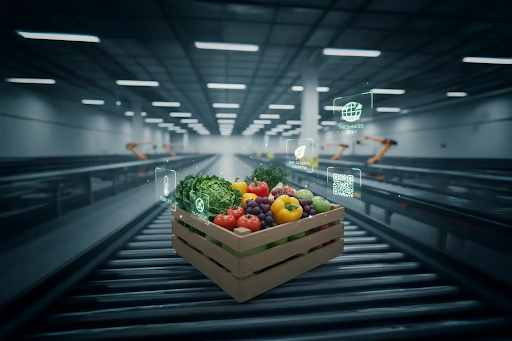
How RFID is Improving Food Safety & Cold Chain traceability in UAE
The development of the food industry in the UAE can be attributed to various reasons such as high consumer demand for food products, strict food safety standards, and increased number of grocery stores, restaurants, cold stores, and food logistics providers. This is because the UAE imports many of its food products and therefore, their quality and freshness while in transit have become critical concerns. In this case RFID technology in the food industry has been critical.
Manufacturers, distributors, cold storage providers, and retailers within the food industry are using RFID to increase traceability maintain proper temperature conditions for temperature sensitive items, reduce wastage, and follow food safety standards.
Uses of RFID in the Food Industry
The technology of RFID utilizes RFID tags, readers, antennas, and software that are used in identifying and tracking items in real time. With regard to food products RFID tags are fixed to food packaging, cartons, pallets or food products themselves to keep track of the movement and conditions of each products.
Unlike barcodes, RFID doesn’t need line of sight reading; hence, multiple products can be read at once, which makes RFID very useful when it comes to dealing with food products.
Currently, RFID in Food Industry applications include:
- Monitoring the cold chain process
- Tracing food products along the supply chain
- Inventory control
- Automating warehouses
- Expiry date monitoring
- Temperature monitoring
- Shipment verification
- Stock visibility at retail stores
The Importance of Cold Chain Traceability
Cold chain logistics involves the movement and storage of temperature-sensitive items such as:
- Dairy items
- Seafood
- Frozen food
- Meat products
- Fruits & vegetable
- Pharmaceutical products
Any slight change in temperature could adversely affect the item. The manual system has been found to be incapable of offering real time monitoring and hence has failed in many cases.
Considering the increasing stringency of standards set by the UAE food safety authority, it is common for businesses to use RFID technology within their food industry framework.
How RFID Enhances Food Safety
- Temperature Sensing in Real Time
Advanced RFID technology may incorporate temperature sensors to monitor environmental factors throughout transit and in storage facilities. An alert is raised when the temperature levels are beyond the set maximum.
Advantages for food business will be:
- No spoilage
- Quality preservation
- Compliance with regulations
- Fewer customer complaints
- Recalls avoided
The deployment of RFID temperature monitoring becomes critical for distributing frozen and chilled foods in the United Arab Emirates’ extreme temperatures.
- Product Traceability in End to End Flow
One of the biggest strengths of RFID technology when it comes to its usage in the Food Industry is the aspect of traceability. The RFID system tracks the following aspects of a product flow along the value chain:
- Production information
- Batch codes
- Storage process
- Logistics information
- Warehousing information
- Shipping schedule
In case of any contamination, it will be easy for companies to identify affected goods and isolate them before affecting all other goods in stock.
Enhancing Inventory Accuracy in Food Warehouses
A food warehouse manages thousands of SKU numbers per day and manually managing inventory is challenging and prone to errors. RFID helps achieve inventory visibility through rapid scanning of large quantities of goods and pallets.
Advantages include:
- Quick stock counting
- Accurate inventory recording
- Minimized human errors
- Effective stock rotation
- Efficient FIFO management
- Minimal product expiration
By using RFID technology in the food industry’s warehouse solution, organizations can keep their inventory at its optimum level.
Faster Receiving and Dispatch Operations
RFID greatly increases efficiency of receiving and dispatching operations in the warehouses. Rather than having workers scan all cartons manually, RFID readers automatically pick up signals from cartons passing through dock doors or the RFID portal system.
RFID technology enables food distributors to:
- Save on receiving time
- Increase shipment accuracy
- Eliminate paper work
- Increase operational productivity
- Increase visibility
This is particularly useful in high throughput food distribution facilities in the United Arab Emirates.
Reducing Food Waste and Spoilage
Another problem faced by many companies around the world is food waste. This may occur due to improper management of their shelf life and storage condition.
By implementing the RFID in Food Industry technology, one will be able to manage the expiry date of the product along with its storage temperature. Moreover, the RFID technology will help one prioritize those products that are near expiry.
The ways in which RFID can help to avoid food waste include:
- Shelf life management
- Product monitoring
- Cold chain compliance
- Stock rotation improvement
- Instant delays detection
Compliance with UAE Food Safety Regulations
There is a high level of concern regarding food safety and traceability in the UAE government. Companies engaged in the production and distribution of food products are supposed to keep good records.
RFID systems help achieve compliance by offering:
- Digital recording systems
- Product tracing
- Traceability reports
- Compliance documentation
- Shipment history
With the help of RFID for the Food Industry solution, food business organizations will be able to streamline the inspection process.
RFID Applications Across the UAE Food Industry
RFID technology has been adopted by several parts of the Food Industry within the UAE, such as:
- Supermarkets and Chain Stores
Retailers adopt RFID to track stock levels and expiry dates, as well as shelf restocking activities.
- Temperature Sensitive Storage Units
Monitoring of temperature controlled units is done through RFID sensors.
- Food Manufacturing Companies
The use of RFID technologies allows for automatic product monitoring throughout the entire production process.
- Logistics and Distribution
RFID is used to enhance shipping and deliveries within the chain.
- Food Services/ Restaurants & Catering Companies
Food services companies use RFID technology to ensure proper storage of ingredients.
Future of RFID in UAE Food Supply Chains
In line with investments being made by UAE in intelligent logistics and technology solutions, RFID will witness accelerated adoption within the food industry in future. The incorporation of Internet of Things, cloud solutions, artificial intelligence, and warehouse automation technologies will further boost efficiency levels and enhance food safety standards.
Examples of future RFID solutions may be:
- Predictive spoilage analysis using AI
- Automation of cold storage facilities
- Food traceability through blockchain technology
- Transparency for consumers at real time
- Automated reporting on compliance issues
Food safety and traceability of the cold chain are essential factors that should be prioritized by any business involved in the dynamic field of food in the UAE. Manual methods of tracking foods are becoming obsolete and ineffective in handling the intricacies associated with current food logistics.
Through the implementation of RFID in Food Industry technologies, one can gain real time visibility, increase accuracy in tracking of inventories, minimize wastage, improve compliance, and ensure cold chain integrity along the entire supply chain.
Whether in cold stores, warehouses, supermarkets, or food distribution centers, RFID systems are revolutionizing the process of tracking and handling of food products in the UAE.