
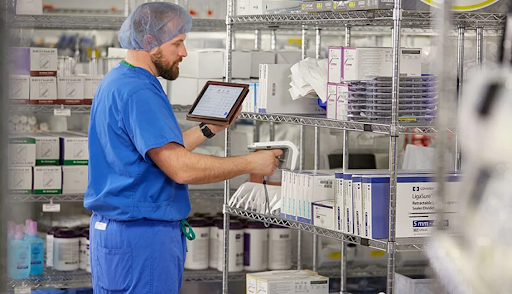
How RFID Helps Real-Time Visibility of Medical Equipment in Hospitals and Improves Patient Care
Wherever healthcare is provided with modern technologies, the factors time, accuracy, and efficiency are able to separate life from death. There are so many medical devices that hospitals have to deal with nowadays, such as infusion pumps, wheelchairs, ventilators, defibrillators, diagnostic tools, and many more. It is the maintenance and supply of these life saving equipment which is the real challenge and the driving force behind healthcare innovations: they have to be available, functional, and easy to find at all times if patient care is to be safe and efficient.
This is precisely the place where RFID medical equipment tracking becomes a revolutionary technology. Implanting RFID in hospitals enables them to locate their assets in real time which is not only beneficial in terms of operational efficiency but also remarkably increases the safety of patient care. Being a top technology solutions provider, Acube Infotech is facilitating the healthcare centers to move towards intelligent, automated tracking systems that radically change the way equipment is managed.
Why Medical Equipment Tracking Matters
Hospitals frequently contend with:
- Equipment that is incorrectly positioned or lost
- The time it takes to find most frequently used devices
- Errors in recording made by manual tracking
- Inefficient usage of equipment
- Regular overbuying as a result of lack of insight
- High rates of maintenance and downtime
Such challenges have a direct impact on the workflow, staff productivity, and patient safety. A medical equipment tracking system that leverages RFID technology can solve these issues by means of automation, precision, and real-time asset visibility.
What Is RFID Medical Equipment Tracking?
Radio Frequency Identification (RFID) is a technology that tracks items automatically through wireless communication between a tag and a reader. Every medical instrument is equipped with an RFID unit that holds a one of a kind ID. These units talk to RFID readers that are installed in different areas of the hospital.
The hospital employees will be able to check out the following information:
- The current location of each asset
- Change history
- Equipment utilization information
- Maintenance and service notifications
- Availability status
Such a system represents the creation of a single, smart hospital equipment management network that is cost efficient.
How RFID Enables Real-Time Visibility in Hospitals
1. Instant Location Tracking of Critical Devices
During an emergency, time is the most valuable thing. Sometimes nurses and technicians spend minutes that could have been used for something else just to find crash carts or portable monitors.
With the help of RFID, real time location data is available on a digital map which staff can find equipment in a few seconds. It does not matter if the device is a patient room, a storage area, or has been taken to another department, the system indicates its exact location.
2. Reduces Equipment Loss and Misplacement
Hospitals are hemorrhaging millions of dollars every year because of the equipment that is misplaced or stolen. Frequently, products are left in the middle of the corridors, relocated without registration, or unintentionally taken off the premises.
If equipment:
- Goes out of a defined area
- Makes a turn at an exit point
- Is idle for an unusually long time
RFID tracking thus defeats the problem of disappearance and lessens the monetary weight of the substitute.
3. Improves Equipment Utilization
Numerous hospitals buy double the number of medical devices than what is required just because they are not in a position to keep track of the usage of these devices effectively. By using RFID, hospitals can have full analytics on:
- The frequency of equipment usage
- What departments underuse or overuse the assets
- Time that the equipment is not being used
- Busy or peak hours of usage
Hospitals will be able to streamline their inventories, share the devices that are not being fully utilized among different departments, and avert the making of additional purchases that are not necessary through these data.
4. Enhances Preventive Maintenance & Compliance
Medical devices need to be periodically calibrated, sterilized, and maintained. Failure to keep these schedules may lead to the use of faulty equipment on patients.
RFID maintains the automation of maintenance through:
- Recording maintenance history
- Delivering automated service reminders
- Preventing equipment from being used until inspection
- Facilitating adherence to the regulatory standards
It is a patient care safety assurance measure that enables them to receive treatment with equipment that is safe, trustworthy, and in good working condition.
5. Streamlines Emergency Preparedness
In the case of an emergency, for example, a trauma scenario or a code blue, it is extremely important that
Within seconds the life-saving tools are found. An RFID system is able to:
- Identify the closest vital instruments
- Record the movement of devices during an emergency
- Get frontline emergency kits ready
Such an arrangement gives the medical facilities time to make the response swift and their
hospitals well coordinated with the work flow of the crisis management.
6. Supports Infection Control and Sterilization Tracking
These are some of the medical instruments such as surgical trays or endoscopes which should be strictly sterilized. To know each stage, they have attached RFID tags:
- Used
- Sent to sterilization
- Sterilized
- Returned to inventory
Such a process of tracking which is automated is without any mistakes thereby the cross contamination risk is greatly lowered and patient safety is improved.
7. Eliminates Manual Audits and Paper Based Tracking
Traditional asset tracking is typically done through manual logs, barcode scans, or spreadsheets methods that are susceptible to errors.
With RFID, the following is possible:
- Scanning without the need for hands intervention
- Inventory audits performed in less time
- Records being updated automatically
- Complete traceability of assets
As a result, hospitals are able to free their staff from hundreds of unproductive hours each month and also get rid of the mistakes that generally occur in the office.
Industries & Hospital Areas Where RFID Is Most Beneficial
The best use of RFID medical equipment tracking is for:
- Emergency Departments
- Operating Theaters
- Radiology Units
- ICU & NICU
- General Wards
- Department of Biomedical Engineering
- Centres of Sterilization
Why Choose Acube Infotech for RFID Medical Equipment Tracking?
At Acube Infotech, we are committed to creating comprehensive end-to-end RFID solutions that are specifically designed for hospitals and healthcare institutions. Our systems equip:
- Real time asset visibility
- High performance RFID hardware
- Custom dashboards & alerts
- Integration with HIS/ERP systems
- Zone based tracking
- Predictive analytics
- Maintenance management modules
- 24/7 support & onsite services
We work with hospitals to revolutionize their systems, cut down on expenses, and provide superior patient experiences.
Conclusion
RFID technology is changing the face of healthcare of the future by providing the healthcare providers with a level of equipment management that is visible, accurate, and under their control like never before. Locating the devices quickly, keeping the devices ready for use, and speeding up the intervention in the case of an emergency are just some of the ways through which RFID contributes to elevating patient safety and, consequently, the quality of care.
With Acube Infotech’s advanced medical equipment tracking system, hospitals can achieve a smarter, safer and more patient centric environment.