
Patient Tracking Solution Using RFID, BLE, and RTLS: Which Technology Fits Your Hospital?
There are several aspects of the healthcare industry which require attention because of its rapid development. Among the most crucial ones is such priority as safety and efficiency of work as well as high quality of services provided. The Patient Tracking Solution is one of those solutions.
They transform the way patients, employees, and all other assets of the hospital are traced. But which one is the best solution for your hospital? This blog aims to give you insights into each technology and which one is best suited for your hospital.
Why Hospitals Need Patient Tracking Systems
Some of the major issues that hospitals encounter are overcrowded wards, wrongly locating patients, delay in treatments, and inefficient working methods.
Installing a RFID Patient Tracking or a similar kind of system can help remedy these problems.
Some major benefits include:
- Making patients safer and lowering risks
- Help cut down the time needed to get the situation under control
- Organize the patients’ path and lead to less waiting times
- Decrease mistakes made by people
- Give a better help on keeping track of the staff
Given the rise in patient numbers, to stay competitive, using a smart tracking system changes from a choice into a must.
RFID Patient Tracking: Reliable and Proven
RFID (Radio Frequency Identification) is among the most popular technologies that healthcare tracking systems rely on.
Working Principle
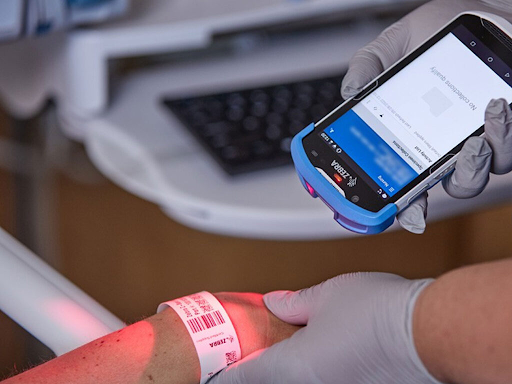
Patients are given wristbands equipped with RFID which send signals to RFID readers in the hospital. These readers identify the patient’s position and log it into the system.
Advantages:
- Very accurate under controlled environment
- Can perform real time tracking
- Minimal need of human intervention
- It works well in tandem with hospital management software
Disadvantages:
- Needs some infrastructure such as reader and antennas
- Relatively expensive at first glance
- Shorter range than some other new technologies
Fit for Purpose: Healthcare organizations looking to implement an effective RFID Patient Tracking system.
BLE : Efficient and Versatile
Cost effectiveness and flexibility make BLE technology a favorite amongst people.
How It Works
Patients’ BLE tags or wristbands continuously send out signals that Bluetooth beacons, evenly spread around the hospital, respond to. These beacons after that forward location information to a main system.
Advantages
- Cheaper to implement
- Installation and scaling made easy
- Long-lasting battery powered devices that save energy
- Compatible with smartphones and mobile apps
Limitations
- A bit less accurate than RFID and RTLS
- Signal may get interfered with in crowded places
Best For: Small to medium hospitals that are watching their budget and still want to get a Patient Tracking Solution.
RTLS: Advanced Real-Time Precision
The most advanced form of patient tracking is by using Real-Time Location Systems, which can offer precise information with a high degree of accuracy.
The Principle Behind the Technology :
RTLS uses a variety of technologies, including RFID, Wi-Fi, BLE, or Ultra-Wideband, which allows for the instant tracking of patients.
Benefits :
- Accurate tracking of an individual or an item
- Instant communication of changes in the location of an individual or an item
- Ability to perform in-depth analysis
- Effective control of the movement of patients
Disadvantages :
- It can be quite costly to implement
- It can be quite complex to implement
- It needs to have a strong IT infrastructure to function
Difference Between RFID, BLE, And RTLS
In order to obtain the most appropriate Patient Tracking Solution that fits you perfectly, you need to understand the difference between RFID, BLE, and RTLS within a hospital setting. RFID Patient Tracking continues to be widely recognized for its reliability and well-structured performance. It limits tracking to within predefined zones and does so quite accurately, which makes it a great fit for hospitals that wish to have a system that is both reliable and not very complicated. The downside is that you have to invest in readers and antennas that are both dedicated hardware pieces, thus making the set up cost higher.
BLE (Bluetooth Low Energy) on the contrary, is actually something that differs from others by being cheap and adaptable.
Moreover, it can practically be rolled out in a hospital that has a scalable solution without heavy infrastructure. BLE may not be able to precisely locate the target, but it is the one that can generally be used for patient tracking and also for making the working process more efficient.
While RTLS is the ultimate solution, it basically offers the next level of tracking, extremely accurate, and at a large scale healthcare environment. It uses more than one technology to deliver uninterrupted tracking of the patients and also provides in-depth analysis. This is why RTLS is a great tool for hospitals that need advanced data and thorough monitoring of their operations. But such advanced features will come at a higher price and lead to a more complex system which will require more effort to be implemented.
Here is an overview:
- RFID is the way to go if you want a system that is reliable and accurate
- BLE is what you should be thinking of if you want something that is less expensive and can be adapted to your different needs
- RTLS is the choice for extremely precise and real-time tracking and very large operations
Choosing the Right Technology for Your Hospital
Here are some factors based on which you can decide a suitable Patient Tracking Solution for your hospital:
1. Hospital Size and Complexity
- Small clinics: BLE is quite enough most of the time
- Medium hospitals: RFID is a great way to keep the balance
- Large hospitals: RTLS is the one with the most features
2. Accuracy Requirements
- Want to do basic tracking: BLE
- Can go for moderately accurate: RFID
- Needs very high accuracy: RTLS
3. Budget
- Very small budget: BLE
- Medium budget: RFID
- Big budget: RTLS
4. Integration Needs
If your hospital already has some IT systems, then it is better to be guided by those systems as to whether you should go for RFID or RTLS so that the new system is able to work well with the hospital management software.
How Acube Infotech Can Help
At Acube Infotech, we are capable of producing custom Patient Tracking Solution software that fit your hospital’s requirements. From RFID Patient Tracking systems to BLE-based and highly sophisticated RTLS solutions, our team is committed to providing you exchange/healthless implementation and integration experience.
Our solutions seek to:
- Strengthen patient safety and care quality
- Boost operational efficiency
- Grow along with your hospital Development
- Provide real-time visibility and analytics
In fact, technology is only part of the root cause, we also partner hand in hand with the healthcare provider to identify the core problem and provide the most suitable technology as part of the solution.
Final Thoughts
The decision of whether to use RFID, BLE, or RTLS will be determined by the factors such as the size of the hospital, the budget, and the operational features needed. On one hand, RFID is well known for its dependable nature; on the other hand, BLE is recognized for its cost-effectiveness; and finally, RTLS is famously known for offering the highest level of accuracy without compromise.
Supporting and choosing the right Patient Tracking Solution will not only lead to better productivity but can also result in enhancing the patient’s quality of life and safety, which are two indispensable aspects of healthcare today.
If you want to start working with an intelligent and extensible RFID Patient Tracking system or if you want to investigate more sophisticated tracking tools, then Acube Infotech is ready to assist you at every step of the process.